Best Grow Lights For Indoor Herb Garden
Find the best grow lights for your indoor herb garden! Learn about LED, T5, and HID lights, light spectrum (PPFD/DLI), and common mistakes to ensure your herbs thrive year-round.
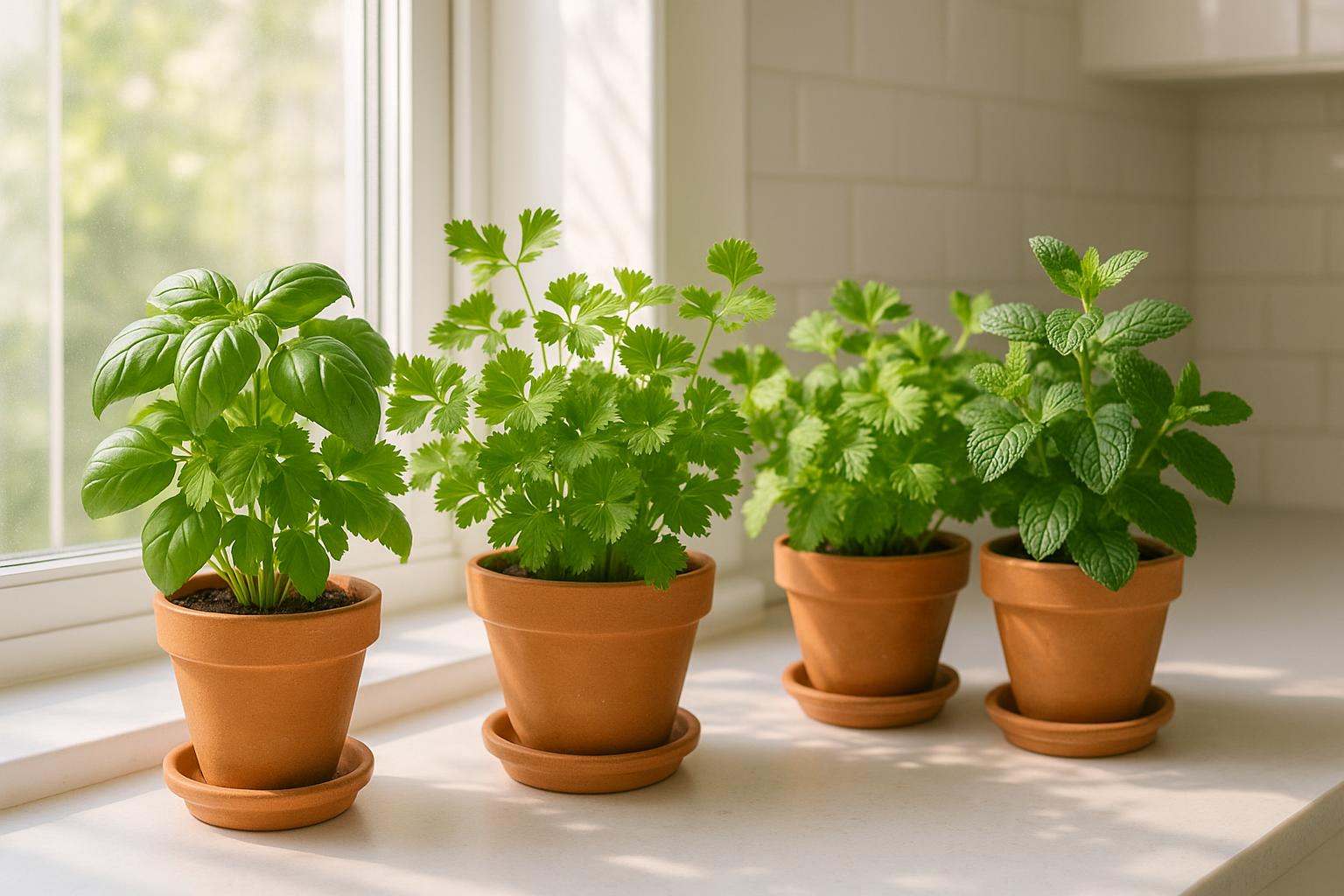
The Ultimate Guide to the Best Grow Lights for Indoor Herb Garden Success
Quick Summary: Your Indoor Herb Garden Lighting Cheat Sheet
Choosing the best grow lights for indoor herb garden success is simple when you focus on Type, Spectrum, and Intensity. Full-spectrum LED lights are the top choice for urban gardeners: they are energy-efficient, long-lasting, and provide the ideal light quality for lush, flavorful herbs. Aim for a Daily Light Integral (DLI) of 10-20 mol/m²/day, which translates to a light intensity (PPFD) of 200-300 µmol/m²/s for 12-14 hours daily. This guide provides everything you need to select, set up, and maintain the perfect lighting system for thriving indoor herbs.
Why Your Indoor Herbs Need Dedicated Grow Lights
Growing herbs indoors is rewarding, but a sunny windowsill is rarely enough. Natural light intensity drops dramatically indoors, leading to weak, flavorless plants. To succeed, you must supplement or replace natural light with a dedicated grow light system. This gives you control over the quality, intensity, and duration of light, ensuring your herbs flourish year-round.
Understanding the Science: Light Quality, Intensity, and Duration
To choose the best grow lights for indoor herb garden setup, you need to understand the three pillars of plant lighting:
1. Light Quality (Spectrum)
Light quality refers to the color of the light (spectrum). Plants use different colors for different processes:
- Blue Light (400-500 nm): Essential for vegetative growth, promoting strong stems and compact foliage.
- Red Light (600-700 nm): Crucial for photosynthesis and overall plant health.
- Full Spectrum: The gold standard for indoor herbs. Full-spectrum lights emit a balanced light across the visible spectrum, closely mimicking natural sunlight. They appear white, ideal for living spaces.
Recommendation: Always opt for full-spectrum grow lights for the most balanced growth.
2. Light Intensity (PPFD and DLI)
Light intensity determines how much energy your plants receive, measured in two ways:
- PPFD (Photosynthetic Photon Flux Density): The instantaneous light intensity (µmol/m²/s).
- DLI (Daily Light Integral): The total dose of light received over 24 hours (mol/m²/day).
For most culinary herbs, the ideal DLI is between 10 and 20 mol/m²/day.
| Herb Type | Ideal DLI (mol/m²/day) | PPFD Target (14-hour cycle) |
|---|---|---|
| Low Light Herbs (Mint, Parsley, Cilantro) | 10 - 15 | 200 - 250 µmol/m²/s |
| High Light Herbs (Basil, Rosemary, Thyme, Oregano) | 15 - 20 | 250 - 350 µmol/m²/s |
Practical Tip: The required DLI can be achieved by adjusting the PPFD (intensity) and the duration (hours the light is on). A higher intensity for a shorter time, or a lower intensity for a longer time, can achieve the same DLI.
3. Light Duration (Photoperiod)
This is simply how long the light is on each day. Most herbs need a consistent period of darkness for respiration.
Recommendation: A photoperiod of 12 to 16 hours is generally recommended. A 14-hour cycle is a great starting point for maximizing growth. Always use a timer to ensure consistency.
The Contenders: Types of Grow Lights for Your Herbs
When searching for the best grow lights for indoor herb garden setup, you will primarily encounter three main technologies.
1. LED (Light Emitting Diode) Grow Lights
Why they are the best: LEDs are the modern standard. They are incredibly energy-efficient, produce very little heat, and have an extremely long lifespan. They can be engineered to emit the exact spectrum of light plants need, including excellent full-spectrum options.
- Pros: High efficiency, low heat, long life.
- Cons: Higher initial cost.
Recommendation: Look for full-spectrum LED fixtures with a high PPF rating.
2. Fluorescent Grow Lights (T5 and CFL)
Fluorescent lights, particularly T5 high-output fixtures, were once popular. They offer good light distribution and are relatively inexpensive.
-
T5 High Output (HO): Efficient, good spectrum, but bulkier than LEDs.
-
CFL (Compact Fluorescent Light): Low-cost option for individual plants, but less efficient and shorter lifespan.
-
Pros: Low initial cost, good light spread (T5).
-
Cons: Shorter lifespan, less energy-efficient, bulkier.
3. High-Intensity Discharge (HID) Lights
This category includes Metal Halide (MH) and High-Pressure Sodium (HPS) lights. These are powerful, commercial-grade lights that produce a lot of heat and consume a lot of energy.
- Recommendation: Avoid these for a small indoor herb garden. They are overkill, too hot, and too expensive to run.
Choosing the Best Grow Lights for Indoor Herb Garden: Key Features to Look For
To make the final selection, focus on these practical features:
1. Full Spectrum Output
Full spectrum is non-negotiable for the best flavor and growth. Avoid the old-school "blurple" (blue and red only) lights. Full-spectrum lights are aesthetically pleasing and provide the balanced light your herbs crave.
2. Adjustable Height and Intensity
Herbs grow quickly, so an adjustable hanging mechanism is essential to maintain the critical distance between the light and the plant canopy. Many modern LED fixtures also offer dimmable settings, allowing you to adjust the intensity (PPFD) as your plants mature.
3. Fixture Style and Coverage
The style of the light should match your setup:
- Bar Lights/Strip Lights: Excellent for small, linear spaces or mounting under shelves.
- Panel Lights: Ideal for covering a larger, square area.
- Gooseneck/Clip-on Lights: Best for a single pot or small cluster of herbs, but often lack the power for a large garden.
Coverage Tip: Ensure the light fixture is wide enough to cover the entire area. Light intensity drops off rapidly at the edges.
4. Built-in Timer
A timer is a must-have for consistency. Many quality grow lights come with a built-in timer; if yours doesn't, purchase a simple, external digital timer. Consistency in the photoperiod is vital.
Setting Up Your System: Distance and Duration
Once you have your grow light setup, proper placement is key.
The Critical Distance Rule
The inverse square law of light means distance is critical.
- LEDs: Place 12 to 24 inches above the plant canopy. Start higher and slowly lower the light while observing your plants.
- T5 Fluorescents: Place closer, typically 6 to 12 inches above the canopy.
The Hand Test: To check for heat stress, hold your hand at the plant canopy level for 30 seconds. If it feels too hot for your hand, it's too hot for your herbs.
The Daily Schedule
Set your timer and stick to it. A 14-hour cycle is a great balance. Darkness is Essential: Do not leave the lights on 24/7. Plants need a period of darkness for respiration.
Common Mistakes to Avoid When Using Grow Lights
Even with the right grow lights, small errors can sabotage your success.
1. Placing the Light Too Far Away
This is the most common mistake. If your herbs are stretching and look weak (leggy), the light is too far away. Lower the light until the new growth is compact and robust.
2. Ignoring the Spectrum
A standard household LED bulb is not the same as a full-spectrum grow light. Household bulbs are designed for human vision, not plant photosynthesis, and lack the necessary wavelengths for healthy growth.
3. Forgetting the Timer
Inconsistent light cycles confuse the plant's internal clock, leading to stunted growth. Invest in a reliable timer.
4. Overlooking Heat Stress
While LEDs are cool, powerful fixtures can still generate heat. If you see leaves curling or turning brown (scorching), the light is too close. Raise the light immediately.
5. Not Pruning Your Herbs
Grow lights encourage dense, bushy growth. Regular harvesting and pruning are essential to allow light to penetrate and encourage new growth, preventing shaded lower leaves and poor air circulation.
Product Recommendations: Focusing on Technology, Not Brands
When shopping, focus on these technologies for the best grow lights for indoor herb garden use:
| Technology Type | Best For | Key Feature to Look For |
|---|---|---|
| Full-Spectrum LED Bar/Strip | Under-cabinet or shelf setups | Dimmable function, high PPFD (200-300 µmol/m²/s at 12 inches) |
| Full-Spectrum LED Panel | Dedicated grow areas or tents | Passive cooling (no fan noise), high efficiency (low wattage for high output) |
| T5 High-Output (HO) Fixture | Budget-friendly, large-scale setups | Reflector quality (to maximize light on plants), bulb color temperature (6500K is best) |
By prioritizing full-spectrum LEDs with adjustable height and a reliable timer, you set your indoor herb garden up for maximum success. The investment is quickly recouped in the volume and quality of fresh, flavorful herbs you'll harvest all year long.
Ready to Grow?
Choosing the best grow lights for indoor herb garden is the first step toward becoming a successful urban gardener. With the right light, you can transform a small corner of your home into a thriving, productive green space.
Take your indoor gardening to the next level! Use the Urban Grow Planner tool to map out your herb varieties, calculate your DLI, and set up a personalized watering and feeding schedule. Happy growing!
Related Articles
How To Start Urban Farming For Beginners
Ready to grow your own food? Learn how to start urban farming for beginners with this comprehensive guide on planning, small-space techniques, essential equipment, and common mistakes to avoid.
Balcony Garden Ideas For Beginners
Discover the ultimate balcony garden ideas for beginners! Learn how to maximize small spaces with vertical gardening, choose the best easy-to-grow plants, and avoid common mistakes. Start your urban oasis today!
Container Gardening For Beginners Step By Step
Start your urban garden with this step-by-step guide to container gardening for beginners. Learn about choosing pots, soil, plants, watering, and avoiding common mistakes.
How To Grow Vegetables On Apartment Balcony
Learn how to grow vegetables on apartment balcony with this ultimate guide. Get tips on sun, containers, soil, and the best compact crops for a successful urban garden.